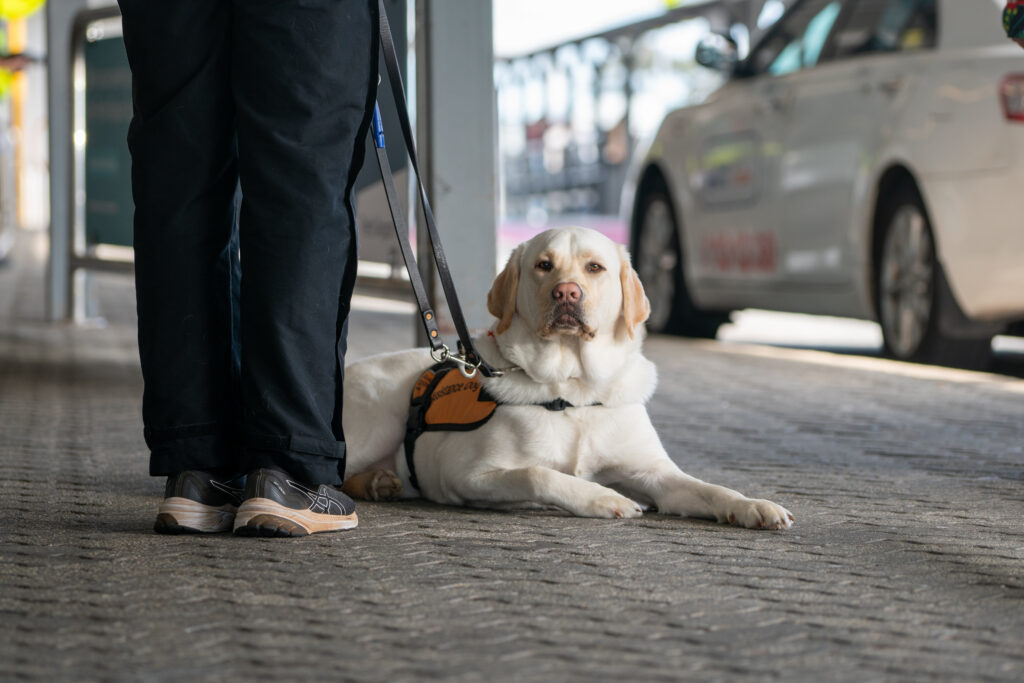
Guide Dogs help people who have low or no vision travel safely and independently, this includes on public transport, in taxis or in ride share vehicles.
Assistance Dogs help people with disability or illness and may also assist with mobility, hearing, autism, PTSD, medical alerts or other daily tasks.
They are specially trained to behave safely in public and meet high hygiene standards and are allowed on all public transport, taxi and ride share vehicles.
How will I recognize a Guide or Assistance Dog?
• By a Guide Dog harness
• An Assistance Dog coat or vest
• An organisation name or logo, or ID card
• A training coat or vest
Vehicle operators are also entitled to ask for proof that the dog is an Assistance or Guide Dog such as an identification card or permit, if needed.
What to do when approached or booked by a person with a Guideor Assistance Dog?
• Allow the dog into the vehicle safely with the passenger.
• Speak directly to the passenger.
• Ask where they would prefer the dog to sit (generally at their feet)
What not to do
• Do not refuse because of a “no pets” rule.
• Do not charge an extra pet or cleaning fee.
• Do not touch, feed or distract the dog.
It is important to remember that access to transport supports independence, safety and dignity.
When in doubt welcome the passenger and their dog
Remember to always be calm, respectful and helpful. A refused trip can leave a person stranded and excluded and may result in a significant fine. Any further questions or concerns? please reach out to us on (08) 9311 8202 or visit our website www.guidedogswa.com.au
This information current as at August 2026 based on Transport WA guidance and Guide Dogs WA Tas training resources.
You can download our guide for Uber and Taxi drivers here.
Photo courtesy of Department of Transport and Major Infrastructure.